

Travelling on a sleeper train in china and waking up to a different province every morning.
XINJIANG covers approximately 1.66 million square kilometres, accounting for nearly one-sixth of China’s total land area. It stretches some 1,950km from east to west and 1,550km from north to south.
So, what’s the best way to explore Xinjiang? And which season is ideal for visiting?
As a travel expert, I would say there’s no one-size-fits-all answer.
From my experience, Xinjiang can generally be divided into Southern and Northern Xinjiang. The south is rich in history and cultural heritage with many ethnic traditions, while the north wins hearts with its majestic mountains, lakes, grasslands and forests.
Ideally, you could cover both Northern and Southern Xinjiang in one grand journey.
After all, Xinjiang’s expressway network has improved tremendously over the years, with modern highways and mountain tunnels making travel far more convenient.
As for how you wish to explore this vast land– by plane, tour coach, self-drive or luxury sightseeing train– the choice is entirely yours.
Of course, for most people, your selection will be tied to your budget.
Twelve years ago, I travelled through Northern Xinjiang; two years ago, I led a large group of travel companions on an extensive journey through Southern Xinjiang.
This autumn, I find myself back in Xinjiang once again. Only this time, I decided to experience luxury rail tourism, a relatively new experience in China that is fast gaining popularity.
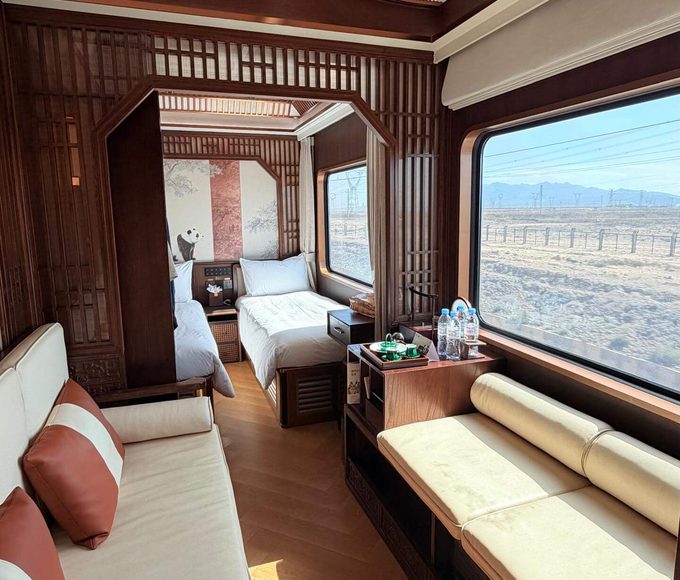
We boarded the Panda Express: Jinxiu Tianfu, embarking on a 16-day, 15-night leisurely exploration of both Northern and Southern Xinjiang.
Our train departed from Chengdu, passing through Lanzhou in Gansu Province before heading west towards the legendary Western Regions.
Sitting comfortably beside the l large panoramic window, I watched mountains, rivers, grasslands and glowing sunsets slowly drift past.
The scenery kept changing, almost like watching a movie unfold before my eyes. Every window seemed to tell its own story of the land.
The train was moving, and so were we.
At night, I would slip into my comfortable bed and fall asleep. The following morning, I simply drew open the curtains, and there it was– another province waiting outside!
“Oh, we’ve arrived in Urumqi,” I said to myself one day.
The train was not merely our transport– it was also our moving hotel. We went sightseeing while our hotel and personal butlers patiently waited for us at the railway station.
Now, who wouldn’t enjoy travelling like that?
I’ve always believed that Northern Xinjiang’s greatest charm lies in its almost untouched natural beauty.
Towering mountains, shimmering lakes, endless grasslands, herds of cattle, horses and sheep– not forgetting the spectacular sight of herders moving their livestock between seasonal pastures in autumn.
That same simplicity and grandeur left a lasting impression on me12years ago. And now, returning after all these years, I must say the magic is still very much alive.
Northern Xinjiang still makes myheart skip a beat.
Urumqi: More to explore
In Urumqi, one of my favourite places is the Xinjiang Museum. Whenever I visit, I make it a point to spend at least 90 minutes exploring its fascinating collections.
I amparticularly interested in the history of General Zuo Zongtang, who led the Qing campaign to recover Xinjiang, as well as the intriguing stories behind the ancient mummies discovered in China’s Western Regions.
Travelling through Xinjiang isn’t just about admiring beautiful scenery. It’s also about understanding the past and present of this extraordinary land.
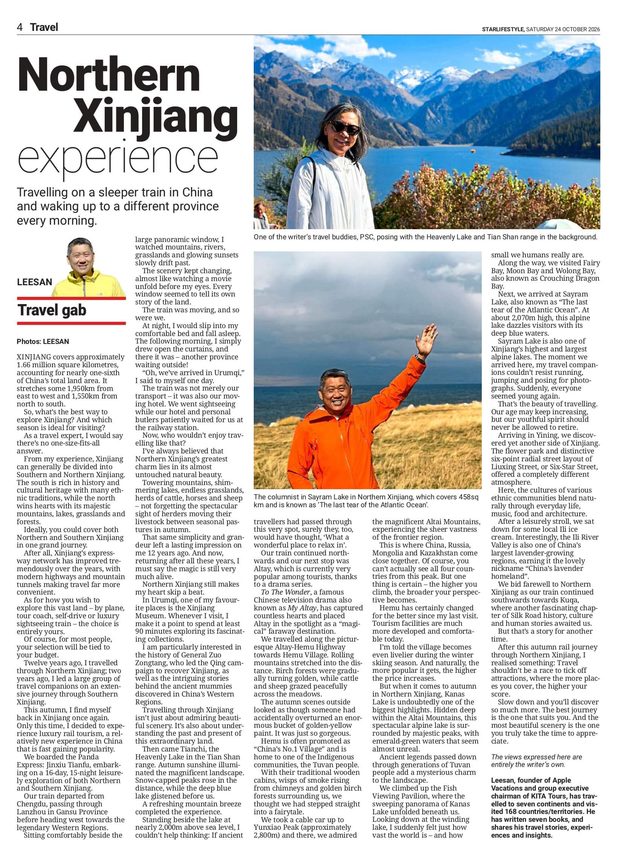
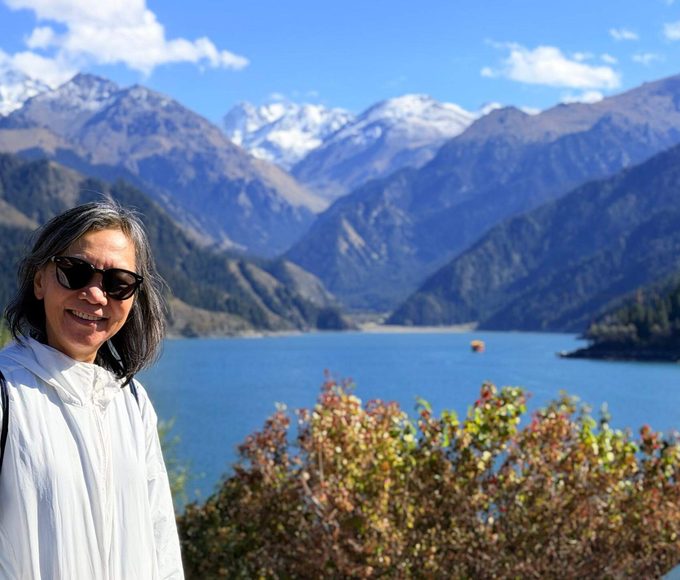
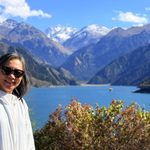
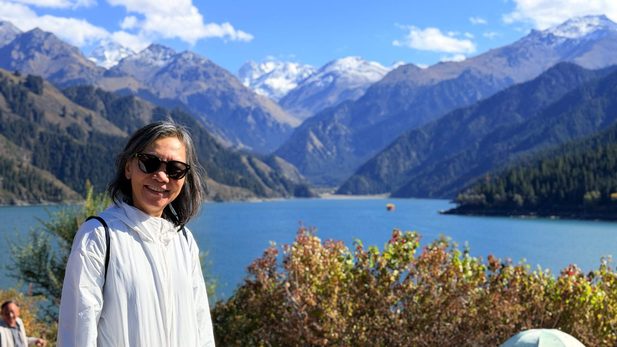
Then came Tianchi, the Heavenly Lake in the Tian Shan range. Autumn sunshine illuminated the magnificent landscape. Snow-capped peaks rose in the distance, while the deep blue lake glistened before us.
A refreshing mountain breeze completed the experience.
Standing beside the lake at nearly 2,000m above sea level, I couldn’t help thinking: If ancient travellers had passed through this very spot, surely they, too, would have thought, ‘What a wonderful place to relax in’.
Our train continued northwards and our next stop was Altay, which is currently very popular among tourists, thanks to a drama series.
To The Wonder, a famous Chinese television drama also known as MyAltay, has captured countless hearts and placed Altay in the spotlight as a “magical” faraway destination.
We travelled along the picturesque Altay-Hemu Highway towards Hemu Village. Rolling mountains stretched into the distance. Birch forests were gradually turning golden, while cattle and sheep grazed peacefully across the meadows.
The autumn scenes outside looked as though someone had accidentally overturned an enormous bucket of golden-yellow paint. It was just so gorgeous.
Hemu: China’s No.1 Village
Hemu is often promoted as “China’s No.1 Village” and is home to one of the Indigenous communities, the Tuvan people.
With their traditional wooden cabins, wisps of smoke rising from chimneys and golden birch forests surrounding us, we thought we had stepped straight into a fairytale.
We took a cable car up to Yunxiao Peak (approximately 2,800m) and there, we admired the magnificent Altai Mountains, experiencing the sheer vastness of the frontier region.
This is where China, Russia, Mongolia and Kazakhstan come close together. Of course, you can’t actually see all four countries from this peak. But one thing is certain– the higher you climb, the broader your perspective becomes.
Hemu has certainly changed for the better since my last visit. Tourism facilities are much more developed and comfortable today.
I’m told the village becomes even livelier during the winter skiing season. And naturally, the more popular it gets, the higher the price increases.
But when it comes to autumn in Northern Xinjiang, Kanas Lake is undoubtedly one of the biggest highlights. Hidden deep within the Altai Mountains, this spectacular alpine lake is surrounded by majestic peaks, with emerald-green waters that seem almost unreal.
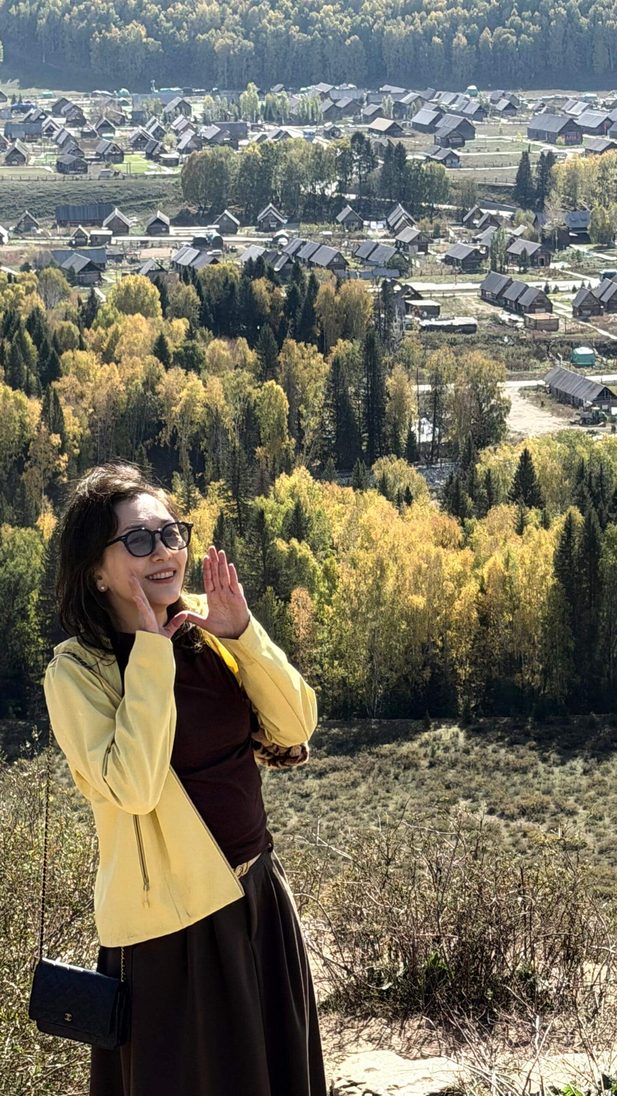
with wisps of smoke gently rising from their chimneys. Snow-capped peaks stand majestically in the distance,
while the Hemu River murmurs softly through the landscape.
It feels as though one has stepped into a living, breathing oil painting of autumn in Northern Xinjiang.

Boon and Karen capture a beautiful memory amid the stunning scenery.
Ancient legends passed down through generations of Tuvan people add a mysterious charm to the landscape.
We climbed up the Fish Viewing Pavilion, where the sweeping panorama of Kanas Lake unfolded beneath us. Looking down at the winding lake, I suddenly felt just how vast the world is – and how small we humans really are.
Along the way, we visited Fairy Bay, Moon Bay and Wolong Bay, also known as Crouching Dragon Bay.
Sayram Lake: The last tear of the Atlantic Ocean
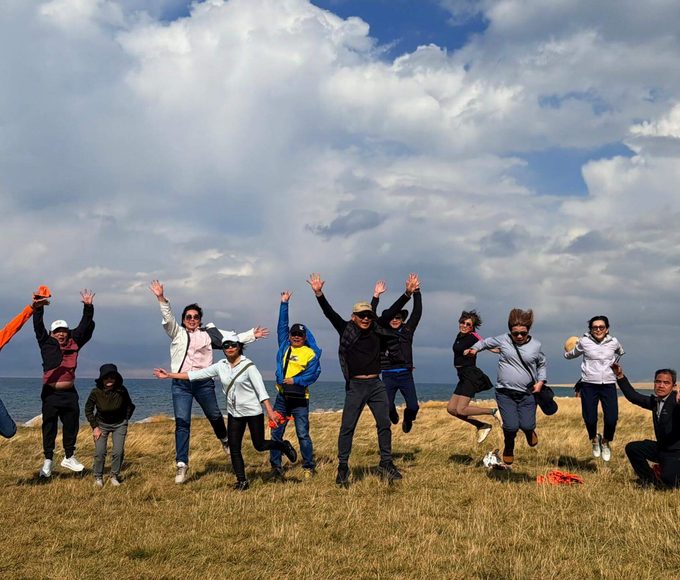
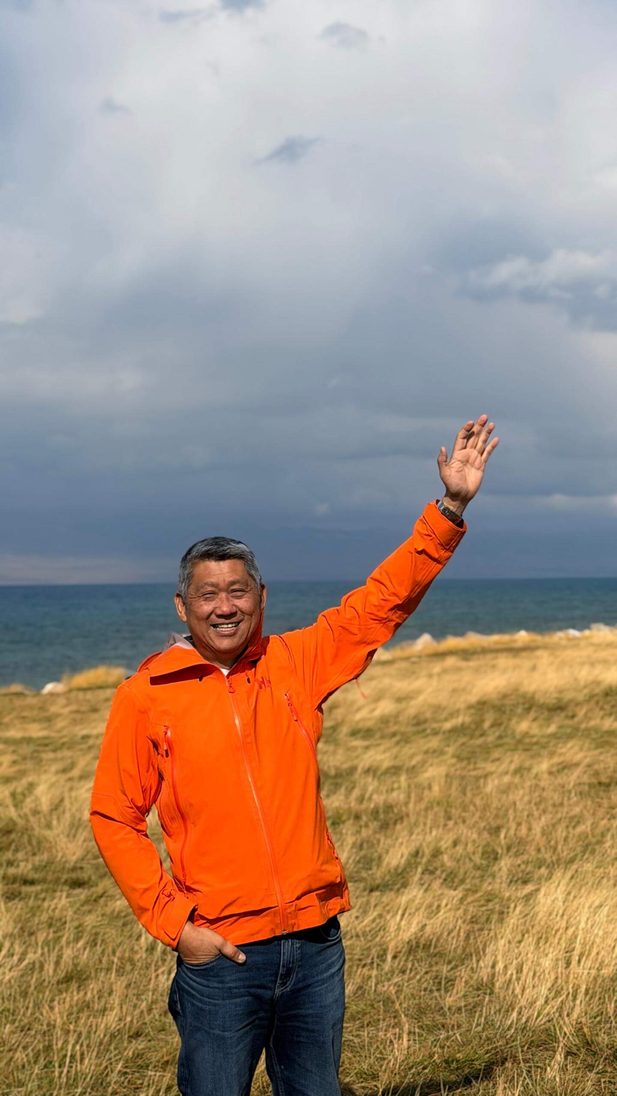
Next, we arrived at Sayram Lake, also known as “The last tear of the Atlantic Ocean”. At about 2,070m high, this alpine lake dazzles visitors with its deep blue waters.
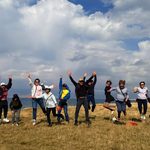
Sayram Lake is also one of Xinjiang’s highest and largest alpine lakes. The moment we arrived here, my travel companions couldn’t resist running, jumping and posing for photographs. Suddenly, everyone seemed young again.
That’s the beauty of travelling. Our age may keep increasing, but our youthful spirit should never be allowed to retire.
Arriving in Yining, we discovered yet another side of Xinjiang. The flower park and distinctive six-point radial street layout of Liuxing Street, or Six-Star Street, offered a completely different atmosphere.
Here, the cultures of various ethnic communities blend naturally through everyday life, music, food and architecture.
After a leisurely stroll, we sat down for some local Ili ice cream. Interestingly, the Ili River Valley is also one of China’s largest lavender-growing regions, earning it the lovely nickname “China’s lavender homeland”.
We bid farewell to Northern Xinjiang as our train continued southwards towards Kuqa, where another fascinating chapter of Silk Road history, culture and human stories awaited us.
But that’s a story for another time.
After this autumn rail journey through Northern Xinjiang, I realised something: Travel shouldn’t be a race to tick off attractions, where the more places you cover, the higher your score.
Slow down and you’ll discover so much more. The best journey is the one that suits you. And the most beautiful scenery is the one you truly take the time to appreciate.